


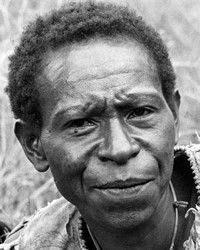

The Gahuku people of Papua New Guinea live mainly in the Eastern Highlands Province, particularly in the districts surrounding Obura-Wonenara and adjacent highland valleys. Their identity is strongly associated with the Alekano language, which belongs to the Chimbu–Wahgi branch of the Trans-New Guinea language family, a linguistic grouping that links many interior highland communities. Highland societies such as the Gahuku historically developed around clan networks, garden cultivation, and reciprocal social systems. Community life has long been shaped by cooperation in land use, ceremonial exchange, and shared stewardship of village resources, with families and clans maintaining continuity across generations.
Daily life among the Gahuku revolves around extended family and clan relationships that determine cooperation in gardening, ceremonial life, and mutual support. Subsistence agriculture, particularly the cultivation of sweet potatoes and other root crops, remains central to livelihood, while pigs serve both economic and ceremonial roles in exchanges and social ceremonies. Community members engage in village gatherings, seasonal events, and shared labor, reinforcing social bonds and cultural rhythms. Tok Pisin is widely used as a lingua franca for schooling, commerce, and broader communication beyond the Gahuku-speaking villages. Traditional music, dance, and storytelling accompany celebrations and rites of passage, preserving cultural knowledge and communal identity.
Christianity is the predominant religious identity among the Gahuku, with most people actively participating in church life. Churches provide places of worship, fellowship, and teaching that shape moral frameworks and community involvement. Portions of scripture, including the New Testament in related regional languages, are used in worship and personal engagement with the Bible, though full translation status may vary with dialect and resource access. Traditional worldview elements related to ancestors and the unseen continue to influence cultural practices for some individuals and families, but the prevailing religious framework for many Gahuku today is Christian.
Despite widespread Christian affiliation, there is a need for deeper discipleship and leadership development among the Gahuku people. Local pastors, church workers, and lay leaders benefit from ongoing support and training grounded in Scripture that equips them to shepherd congregations and nurture spiritual growth. Community ministries that integrate biblical teaching with cultural understanding help families live out their faith in daily life. Youth and family discipleship initiatives that resonate with local identity and rhythms will foster mature faith across generations. Because the Gahuku are in a region with significant Christian presence, believers need to take the gospel to those outside their region.
Pray that Gahuku believers would grow in a practical and transformative love for scripture that shapes family life, community cooperation, and personal witness.
Pray for local pastors, teachers, and leaders to be equipped with wisdom, compassion, and biblical insight as they serve their congregations.
Pray for unity and Christlike reconciliation among families and clans, reflecting the peace of Christ in all relationships.
Pray for youth and young adults to be firmly rooted in faith and empowered to live out the gospel in their homes and villages.
Pray that Gahuku Christians would be encouraged and empowered to share the gospel with neighboring peoples who have limited access to Scripture.
Scripture Prayers for the Gahuku in Papua New Guinea.
https://en.wikipedia.org/wiki/Trans-New_Guinea_languages
https://www.ethnologue.com/language/gah
| Profile Source: Joshua Project |


